Brick Workout
A session that links two disciplines back to back, almost always bike to run, to rehearse the specific discomfort of a race transition.
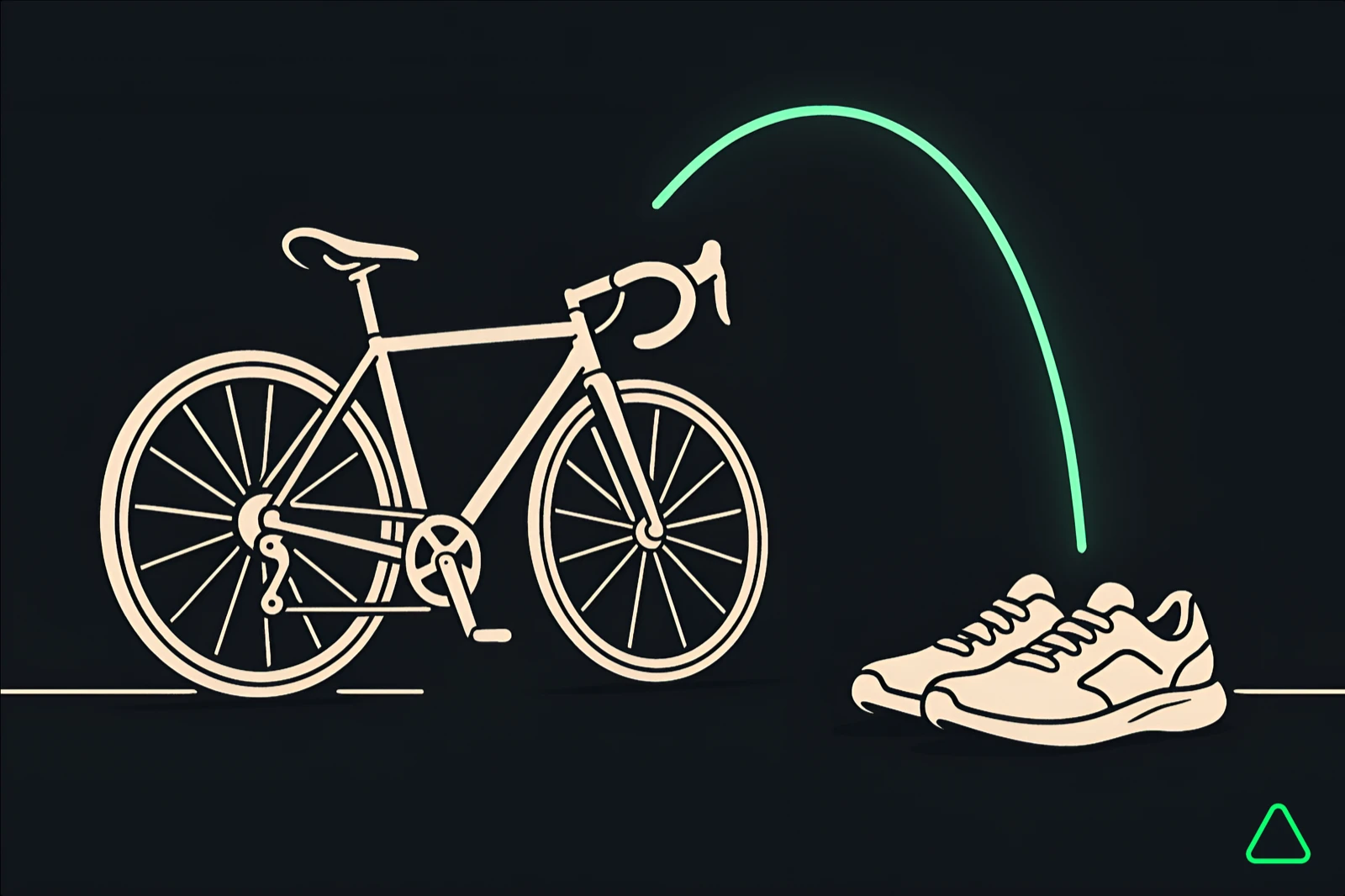
A brick workout links two disciplines back to back in a single session, almost always cycling immediately followed by running. Where the name comes from is debated. Some trace it to how heavy and unresponsive the legs feel running off the bike. Others trace it to the idea of stacking two sessions like laying bricks. Either way, the mechanism it trains is well understood.
What it's actually rehearsing
A brick isn't primarily about cardiovascular fitness. An athlete already training bike and run separately is building that fitness elsewhere. What a brick actually rehearses is the transition itself. Your legs feel different running off the bike than they do running fresh. Pacing that feels sustainable on the bike can be way off for the run that follows. Athletes who never rehearse this tend to go out too hard off the bike in a race and blow up early, or hold back too much and leave time on the table. That's because the first time they feel that specific transition sensation is mid-race.
The common mistake
There's a pull toward making brick sessions long and heroic: a near-full-distance bike ride followed by a substantial run, done once, close to race day. A short run of 10 to 15 minutes off the bike, done regularly throughout a training block, gives far more rehearsal value than one exhausting session done rarely. That's because the transition sensation is what's being trained, not distance capacity. Frequency beats heroics here.
Where it fits in a plan
Bricks show up throughout a periodized build, not just near the race. Their placement interacts with the rest of the week's load. A brick stacked on top of an already-heavy day trains something different than one placed to specifically rehearse race-day pacing. That's part of why brick placement is a periodization decision, not a workout dropped in wherever there's a free slot.